The 5 Rs of Radiobiology: Essential Concepts for FRCR Part 1 Success
The 5 Rs of radiobiology explain why we fractionate radiotherapy. Master Repair, Redistribution, Repopulation, Reoxygenation, and Radiosensitivity for your FRCR Part 1 exam.
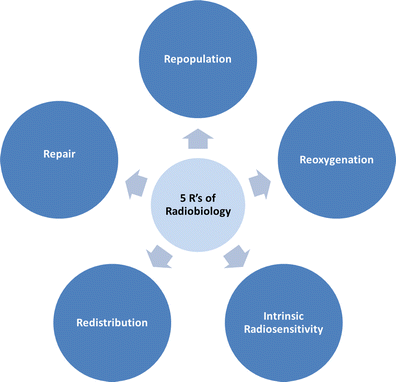
One of the most fundamental questions in radiation oncology is: why do we divide the total radiation dose into multiple smaller fractions rather than delivering it all at once? The answer lies in the 5 Rs of radiobiology—five biological principles that explain how fractionation improves the therapeutic ratio between tumour control and normal tissue damage.
Originally described as the "4 Rs" by Withers in 1975, a fifth R (Radiosensitivity) was added by Steel in the 1980s. More recently, some researchers have proposed a 6th R—Reactivation of immune response—reflecting the growing importance of immunotherapy in cancer treatment. For FRCR Part 1, understanding the classical 5 Rs is essential.
1. Repair
Repair is one of the primary reasons we fractionate radiotherapy. When cells are irradiated, they sustain different types of DNA damage:
- Lethal damage: Irreparable damage that inevitably leads to cell death (e.g., dicentric chromosomes, ring chromosomes)
- Potentially lethal damage: Damage that can be repaired under certain circumstances, particularly when cells are prevented from dividing
- Sublethal damage: Damage that can be repaired within hours if no further radiation is given
By splitting the radiation dose into fractions, we allow time between treatments for cells to repair sublethal damage. Normal tissue cells typically have intact DNA repair mechanisms (functional TP53 and other repair pathways), allowing them to recover efficiently. Malignant cells often have defective repair mechanisms due to mutations, making them less able to repair damage between fractions.
Clinical implication: The repair advantage primarily benefits late-responding normal tissues (low α/β ratio), which are more sensitive to fraction size. This is why conventional fractionation (1.8-2 Gy per fraction) spares late effects.
2. Redistribution (Reassortment)
Cells vary in their radiosensitivity depending on their position in the cell cycle:
- Most sensitive: M phase (mitosis) and late G2
- Moderately sensitive: G1 phase
- Most resistant: Late S phase
After a fraction of radiation, the most sensitive cells (those in M and G2) are killed preferentially. The surviving cells—predominantly those in radioresistant S phase—continue through the cell cycle. By the time the next fraction is delivered, many of these survivors have redistributed into more radiosensitive phases.
Clinical implication: Redistribution increases tumour cell kill over a fractionated course compared to a single large dose. This effect is particularly important for rapidly cycling tumour cells.
3. Repopulation
Repopulation refers to the increase in cell division seen in both normal and malignant cells during a course of radiation therapy. The timing and rate of repopulation vary by tissue type:
Normal Tissues
- Early-responding tissues (skin, mucosa, gut epithelium): Begin repopulating at approximately 4 weeks into treatment
- Late-responding tissues (spinal cord, brain, kidney): Only begin repopulation after a conventional treatment course is completed
Tumours
Some tumours exhibit accelerated repopulation—a marked increase in growth fraction and decrease in doubling time—typically starting at 4-5 weeks into treatment. This phenomenon is particularly notable in:
- Squamous cell carcinomas of the head and neck
- Cervical cancer
Clinical implication: Accelerated repopulation is dangerous because it means more tumour cells must be sterilised if treatment extends beyond 5 weeks. This is why overall treatment time matters and why treatment gaps should be avoided. Accelerated fractionation schedules (like CHART) were developed to counteract this effect.
4. Reoxygenation
Oxygen is a potent radiosensitiser. Well-oxygenated cells are approximately 2.5-3 times more sensitive to radiation than hypoxic cells (this ratio is called the Oxygen Enhancement Ratio, or OER).
Tumours often contain regions of hypoxia due to inadequate blood supply:
- Chronic (diffusion-limited) hypoxia: Cells beyond the diffusion distance of oxygen from blood vessels (~70-150 μm)
- Acute (perfusion-limited) hypoxia: Transient hypoxia caused by temporary closure of blood vessels
After a radiation fraction, well-oxygenated (oxic) cells are killed preferentially. Between fractions, previously hypoxic cells may reoxygenate through two mechanisms:
- Fast component (hours): Acutely hypoxic cells reoxygenate when temporarily closed vessels reopen
- Slow component (days): As the tumour shrinks, chronically hypoxic cells move closer to functioning blood vessels
Clinical implication: Fractionation allows reoxygenation between doses, gradually eliminating the hypoxic cell population that would otherwise survive a single large dose. This is one of the key advantages of conventional fractionation over hypofractionation for some tumour types.
5. Radiosensitivity
The fifth R acknowledges that beyond the other four factors, there is intrinsic radiosensitivity that varies between different cell types. This is genetically determined and independent of the other Rs.
Radiosensitive tissues and tumours:
- Haematological cells and haematological malignancies
- Germ cells and germ cell tumours
- Epithelial stem cells
- Small cell lung cancer
Radioresistant tissues and tumours:
- Neurons
- Myocytes
- Melanoma
- Sarcoma
- Renal cell carcinoma
Clinical implication: Intrinsic radiosensitivity affects treatment outcomes and may explain why some tumours respond poorly to radiotherapy regardless of dose or fractionation. It's now thought to be the primary determinant of tumour response to radiation.
How the 5 Rs Work Together
The 5 Rs can work in opposing directions:
- Beneficial effects of fractionation: Repair (spares late-responding normal tissues), Redistribution (increases tumour cell kill), Reoxygenation (eliminates hypoxic tumour cells)
- Detrimental effects of fractionation: Repair (allows some tumour cells to recover), Repopulation (tumour cells multiply between fractions)
Modern fractionation schemes are designed to maximise the beneficial effects while minimising the detrimental ones. The optimal balance depends on the specific tumour type and the normal tissues at risk.
The 6th R: Reactivation of Immune Response
Recent research has highlighted that radiotherapy can modify the tumour microenvironment and induce both local and systemic immune responses (the "abscopal effect"). While not yet standard in FRCR curricula, this emerging concept reflects the integration of radiotherapy with immunotherapy in modern oncology practice.
Key Points for FRCR Part 1
- The 5 Rs explain the biological rationale for fractionation
- Repair benefits late-responding normal tissues more than tumours (due to the α/β ratio difference)
- Redistribution and reoxygenation improve tumour cell kill with fractionation
- Accelerated repopulation starts at 4-5 weeks and can cause treatment failure if overall time is prolonged
- Intrinsic radiosensitivity varies between tumour types and is genetically determined
Practice with PassOncology
Our Radiobiology module covers the 5 Rs in depth, with questions testing your understanding of how these principles apply to clinical scenarios. Master these concepts and walk into your exam with confidence.
Enjoyed this article?
Share it with a colleague preparing for their FRCR.